Copilot Chat
Copilot Chat
2022–2024 • CONVERSATIONAL AI FOR PRODUCTIVITY
2022–2024 • CONVERSATIONAL AI FOR PRODUCTIVITY
Copilot Chat is Microsoft 365’s LLM-powered conversational assistant, designed to help users reason, plan, and act across their work. It connects documents, data, and collaboration tools in one place, transforming AI from an embedded feature into a persistent collaborator. As the design representative for Word supporting the Office AI team, I helped define core interaction patterns for Copilot Chat in document-based workflows.
Copilot Chat is Microsoft 365’s LLM-powered conversational assistant, designed to help users reason, plan, and act across their work. It connects documents, data, and collaboration tools in one place, transforming AI from an embedded feature into a persistent collaborator. As the design representative for Word supporting the Office AI team, I helped define core interaction patterns for Copilot Chat in document-based workflows.
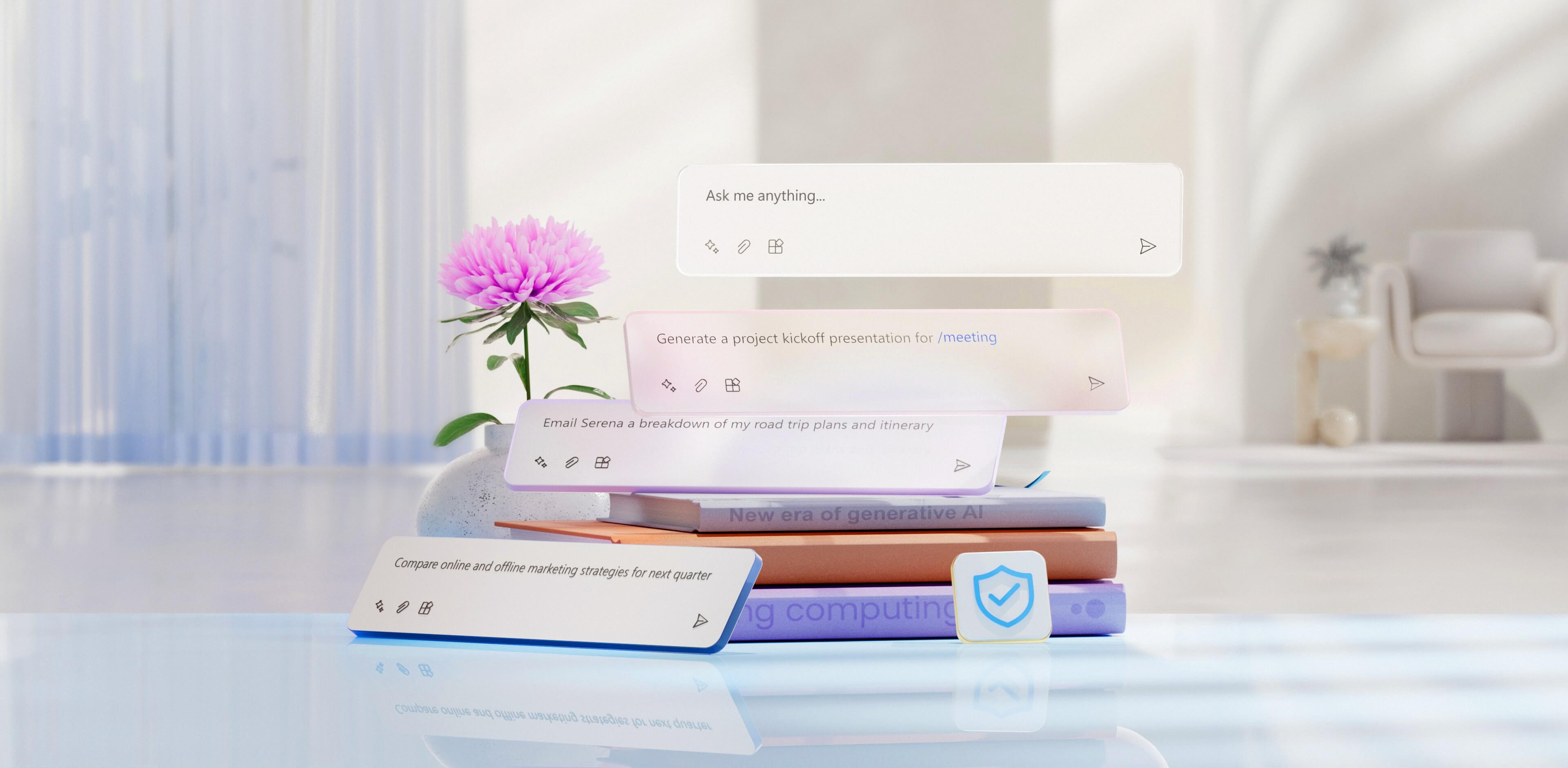
NOVEMBER 2022–JANUARY 2023
As Draft with Copilot gained traction, it became clear that conversation would be central to Microsoft’s long-term AI strategy. Unlike canvas-bound drafting, chat introduced a flexible interaction model that raised new challenges around context awareness, intent clarity, and cognitive load.
I collaborated with a product manager, an engineer, and an applied scientist to explore how chat-based AI could integrate meaningfully into Word. Our goal was to assess whether conversation could serve as a viable productivity primitive within a document-focused tool. During this phase, I established the foundational interaction model for in-document conversations, clarifying how chat should appear, access context, and support task switching.
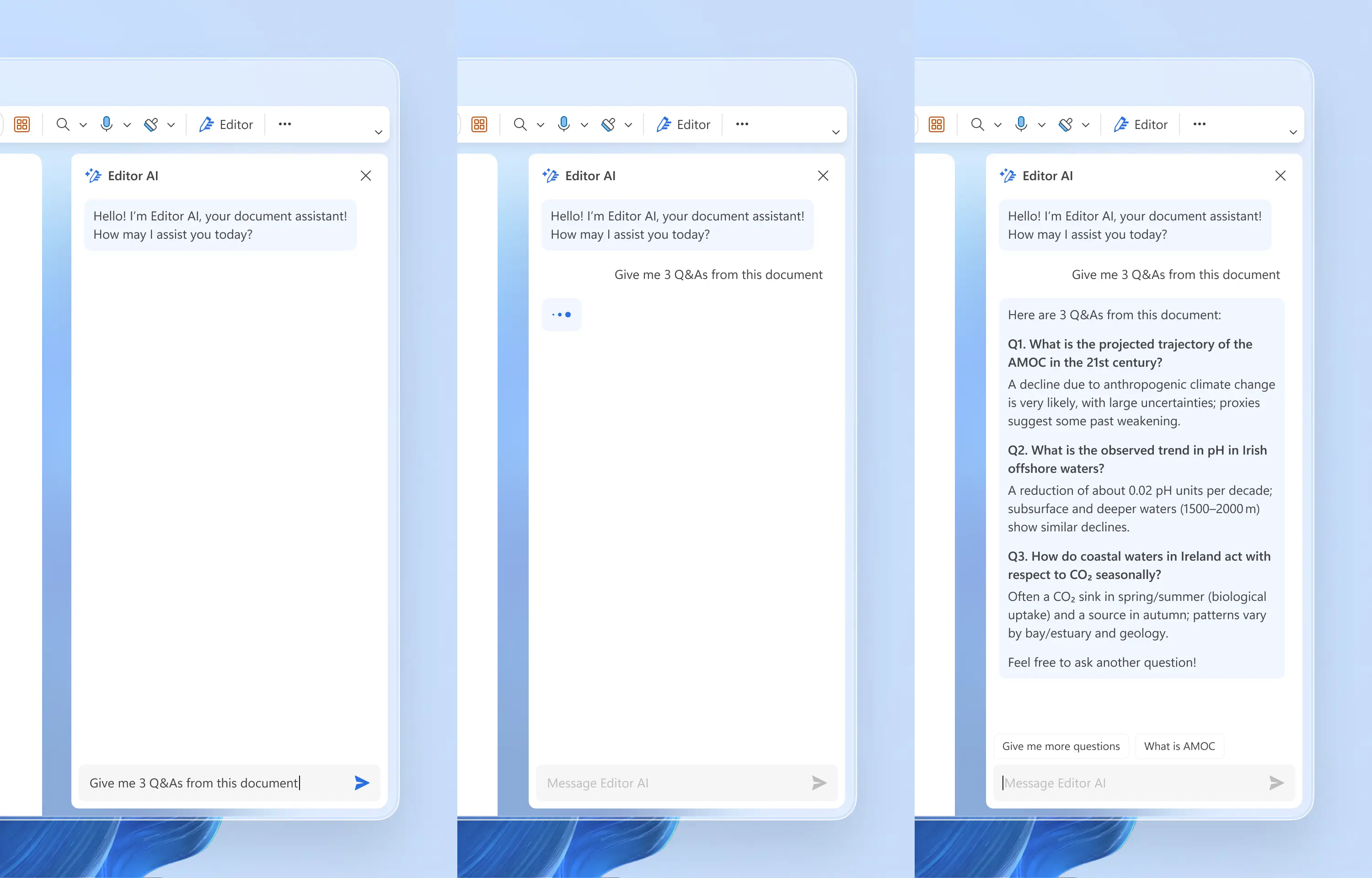
These early explorations laid critical groundwork for how conversational AI would later manifest across Microsoft 365:
NOVEMBER 2022–JANUARY 2023
As Draft with Copilot gained traction, it became clear that conversation would be central to Microsoft’s long-term AI strategy. Unlike canvas-bound drafting, chat introduced a flexible interaction model that raised new challenges around context awareness, intent clarity, and cognitive load.
I collaborated with a product manager, an engineer, and an applied scientist to explore how chat-based AI could integrate meaningfully into Word. Our goal was to assess whether conversation could serve as a viable productivity primitive within a document-focused tool. During this phase, I established the foundational interaction model for in-document conversations, clarifying how chat should appear, access context, and support task switching.
These early explorations laid critical groundwork for how conversational AI would later manifest across Microsoft 365:
JANUARY–SEPTEMBER 2023
As conversational AI became a priority, the Office AI design team was formed to build a unified Microsoft 365 Copilot Chat experience that could scale across applications. Building on my early explorations, I partnered closely with them as the design representative for Microsoft Word.
I defined several core conversational patterns, such as Zero Queries (starter prompts) and context-aware Suggestion Pills (one-tap follow-ups). More than just shortcuts, these suggestions acted as scaffolding, implicitly teaching users how to structure effective prompts for better AI outcomes. They improved key onboarding metrics and have been preserved through multiple redesign cycles.
I also defined how the chat reacts to user selection on the canvas, ensuring the canvas and chat experiences felt connected rather than siloed.
+72%
FIRST USE SUCCESS RATE
+44%
UNDERSTOOD WHAT TO DO
JANUARY–SEPTEMBER 2023
As conversational AI became a priority, the Office AI design team was formed to build a unified Microsoft 365 Copilot Chat experience that could scale across applications. Building on my early explorations, I partnered closely with them as the design representative for Microsoft Word.
I defined several core conversational patterns, such as Zero Queries (starter prompts) and context-aware Suggestion Pills (one-tap follow-ups). More than just shortcuts, these suggestions acted as scaffolding, implicitly teaching users how to structure effective prompts for better AI outcomes. They improved key onboarding metrics and have been preserved through multiple redesign cycles.
I also defined how the chat reacts to user selection on the canvas, ensuring the canvas and chat experiences felt connected rather than siloed.
+72%
FIRST USE SUCCESS RATE
+44%
UNDERSTOOD WHAT TO DO
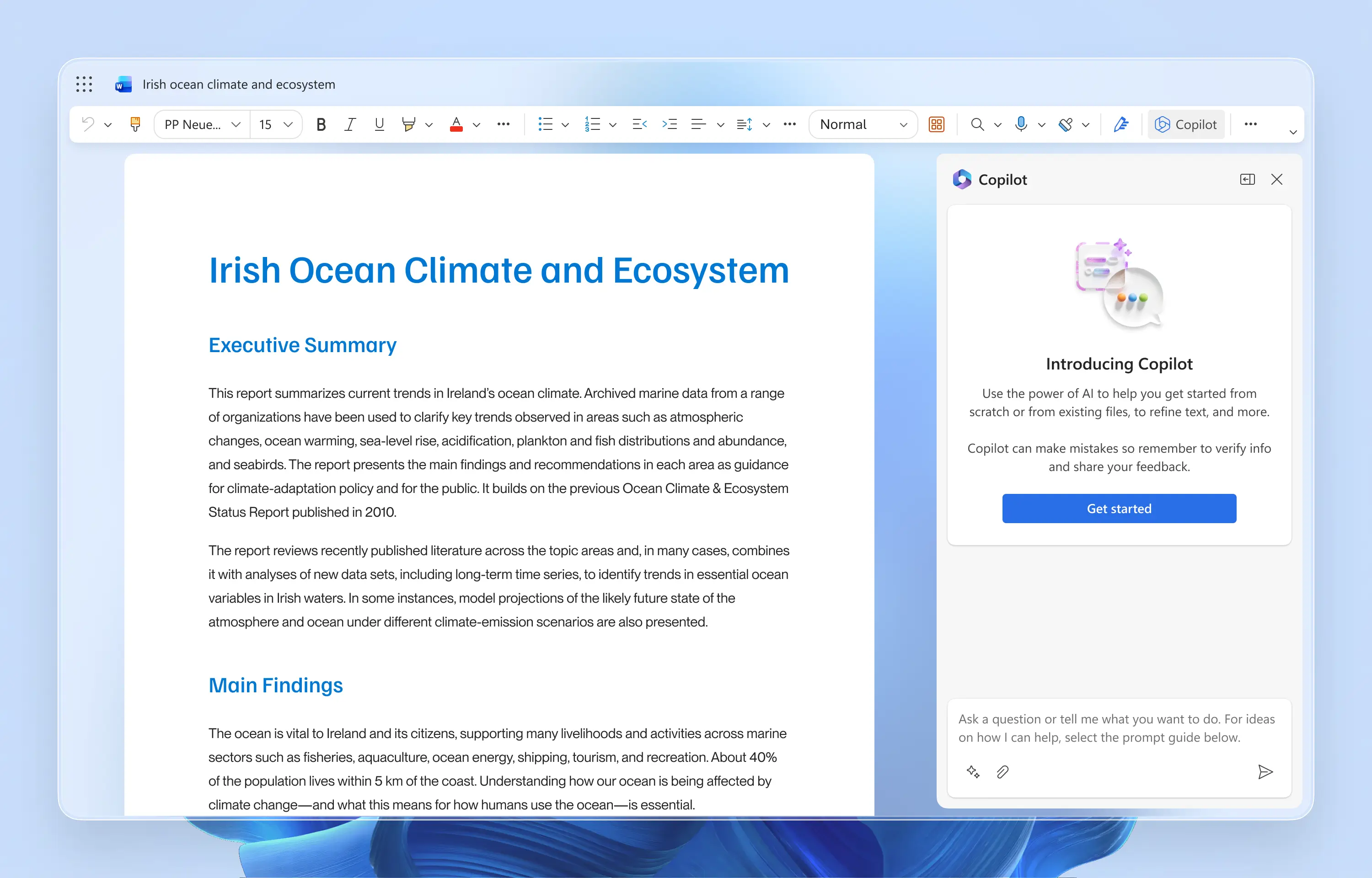
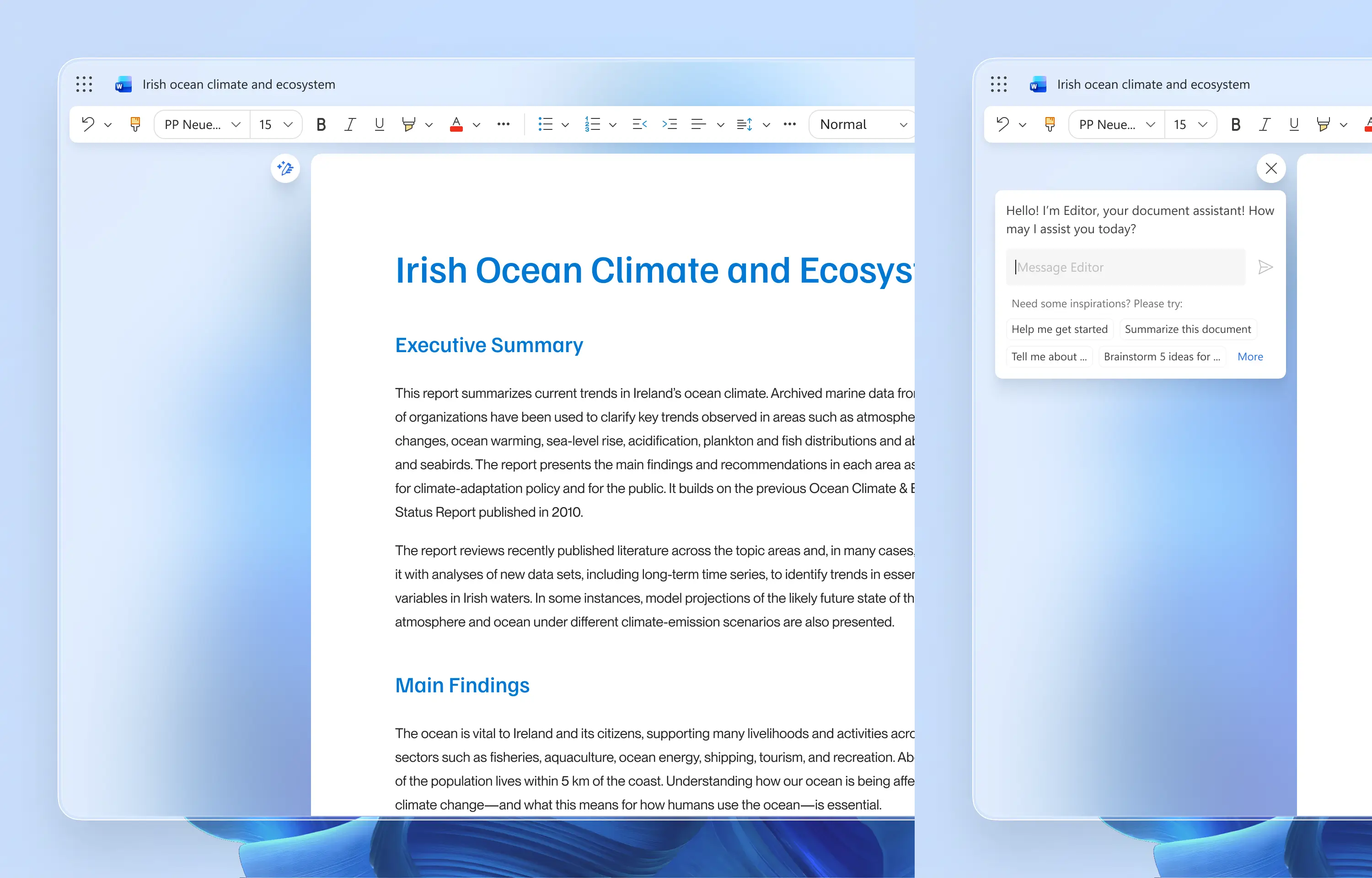
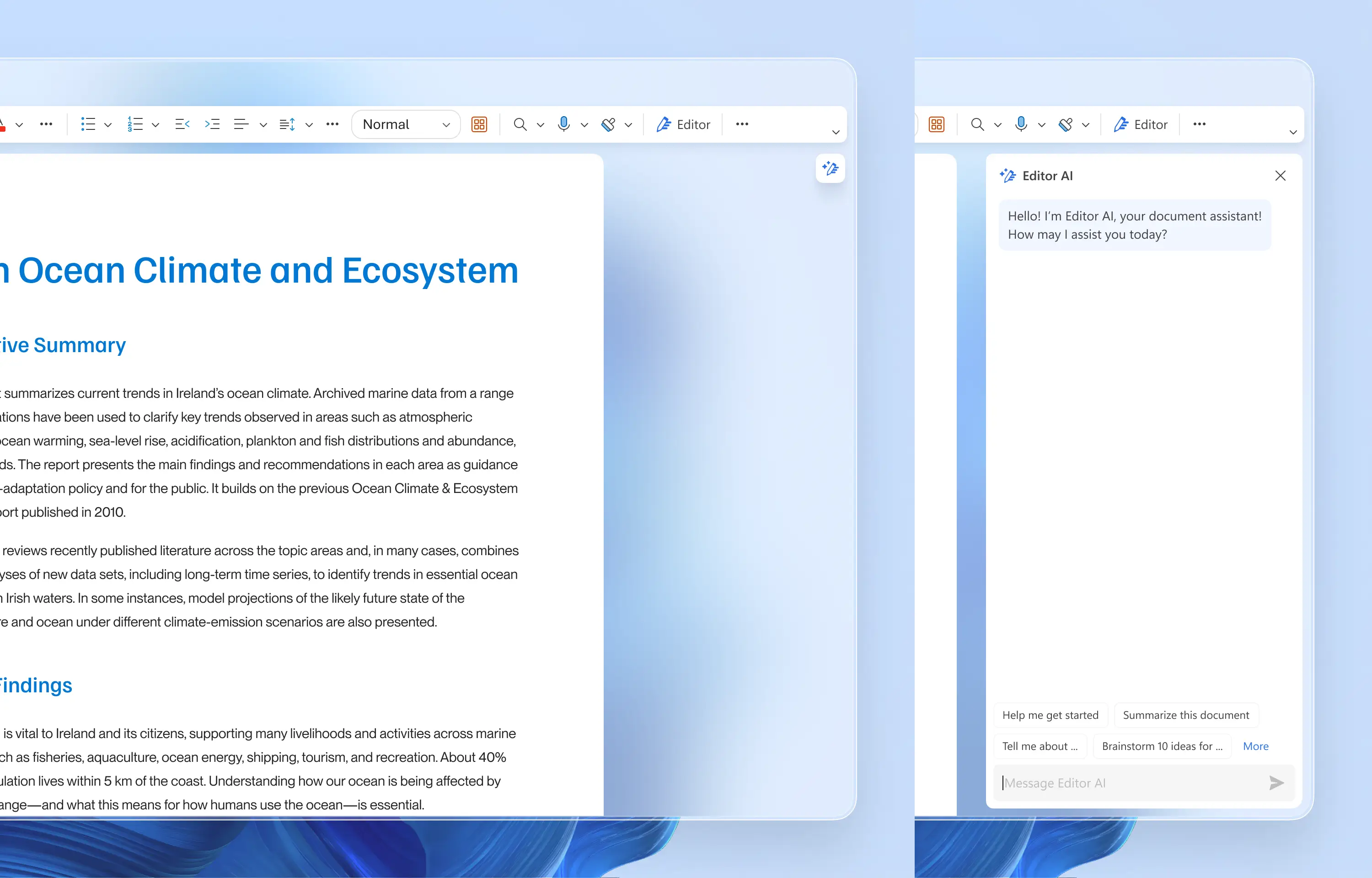
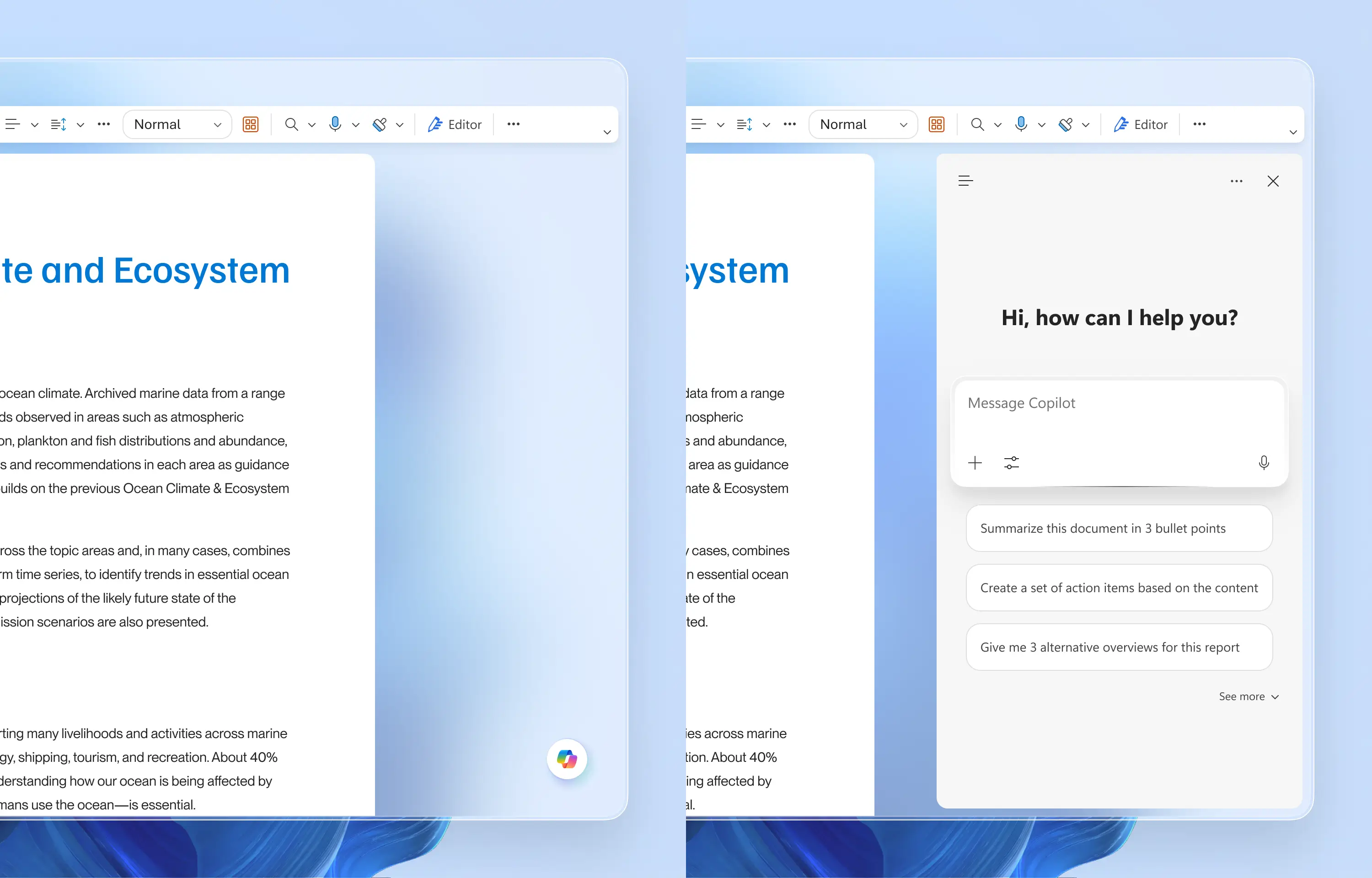
Placing the Copilot Chat entry point in the Ribbon leveraged a shared Office pattern across apps—keeping the experience coherent without introducing a new entry mechanism.
Placing the Copilot Chat entry point in the Ribbon leveraged a shared Office pattern across apps—keeping the experience coherent without introducing a new entry mechanism.
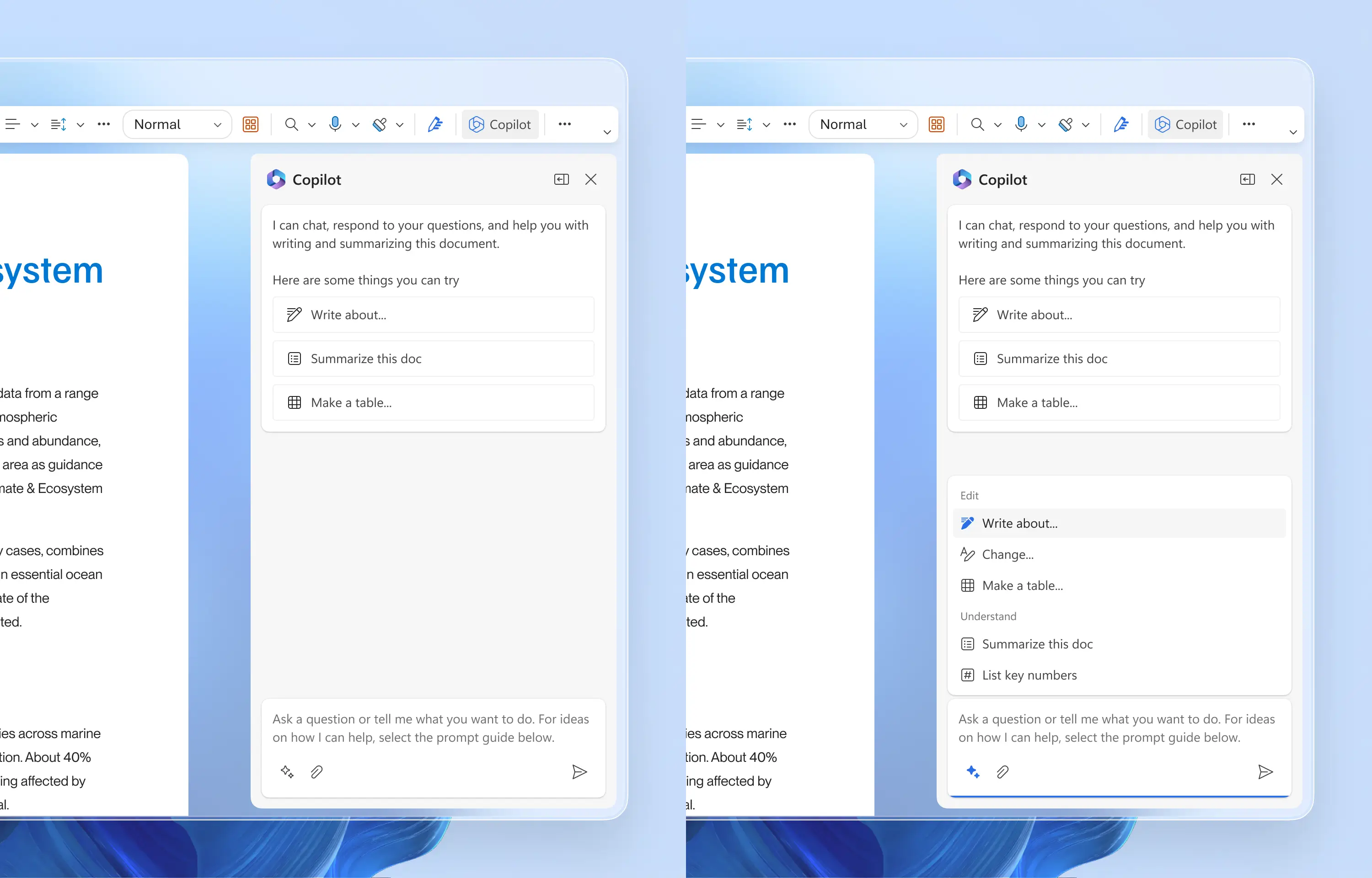
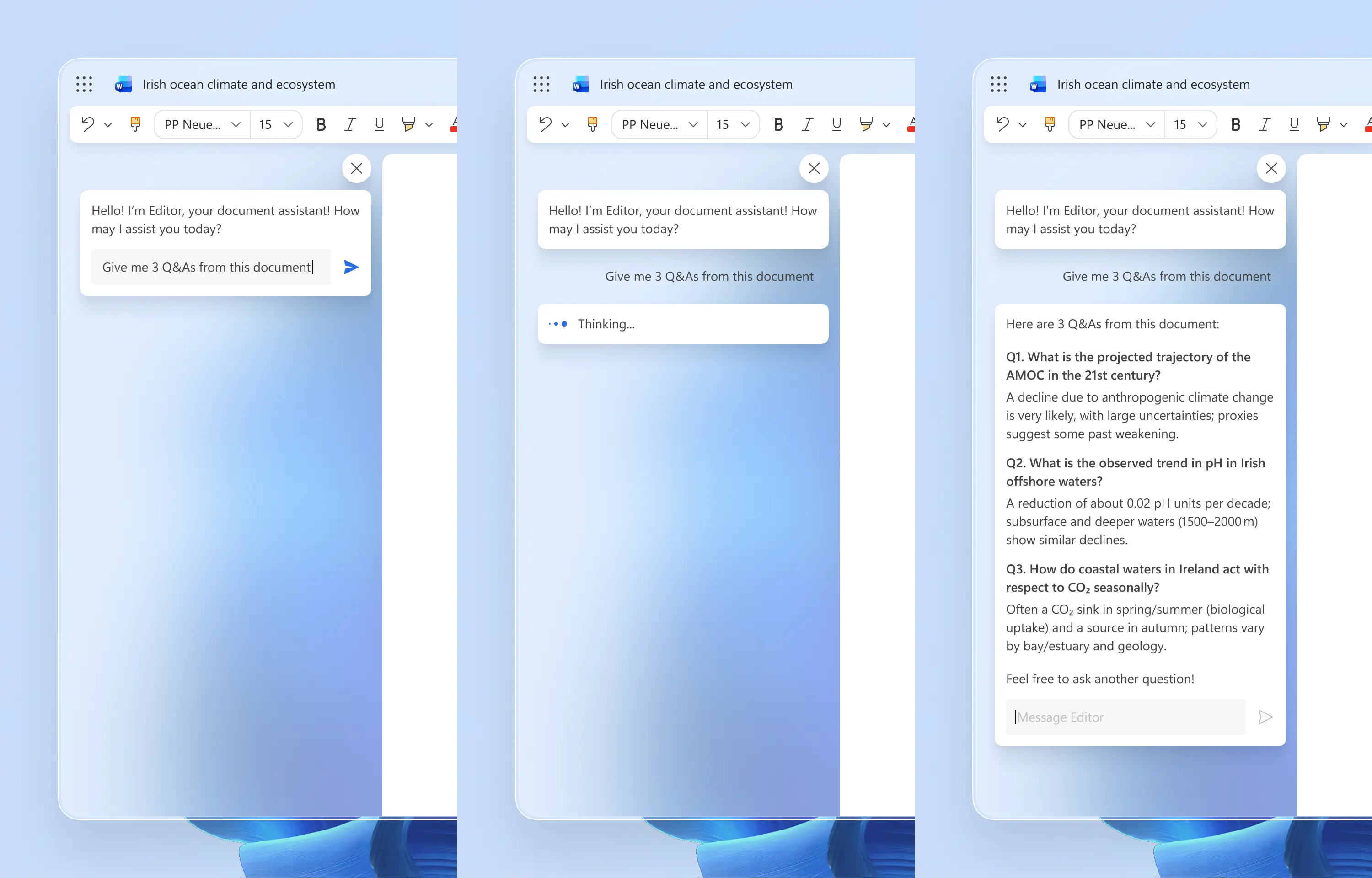
Since many users were new to prompt writing, I designed the onboarding to minimize friction. A small set of quick queries invited immediate interaction, making the first interaction effortless.
Since many users were new to prompt writing, I designed the onboarding to minimize friction. A small set of quick queries invited immediate interaction, making the first interaction effortless.
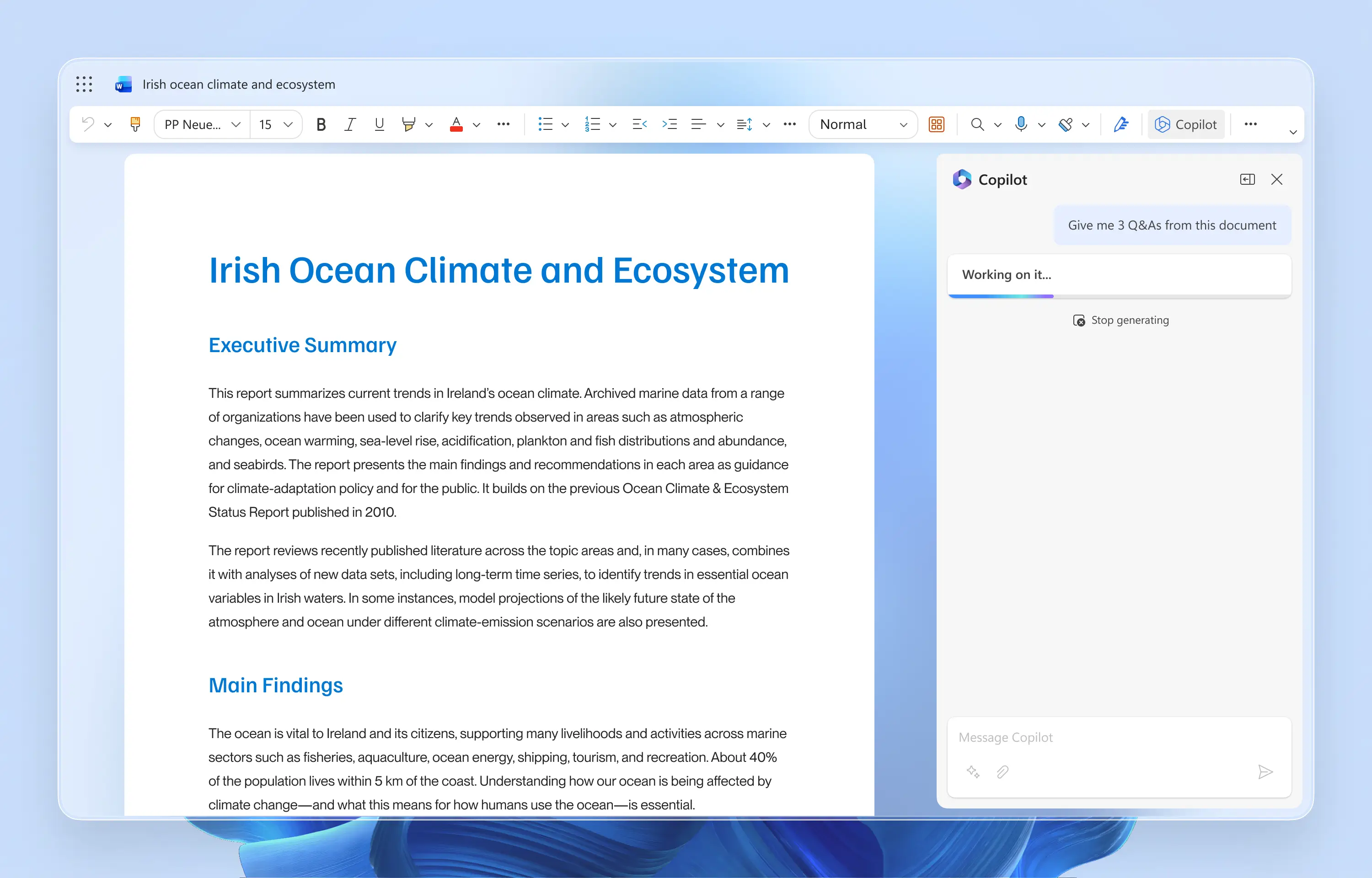
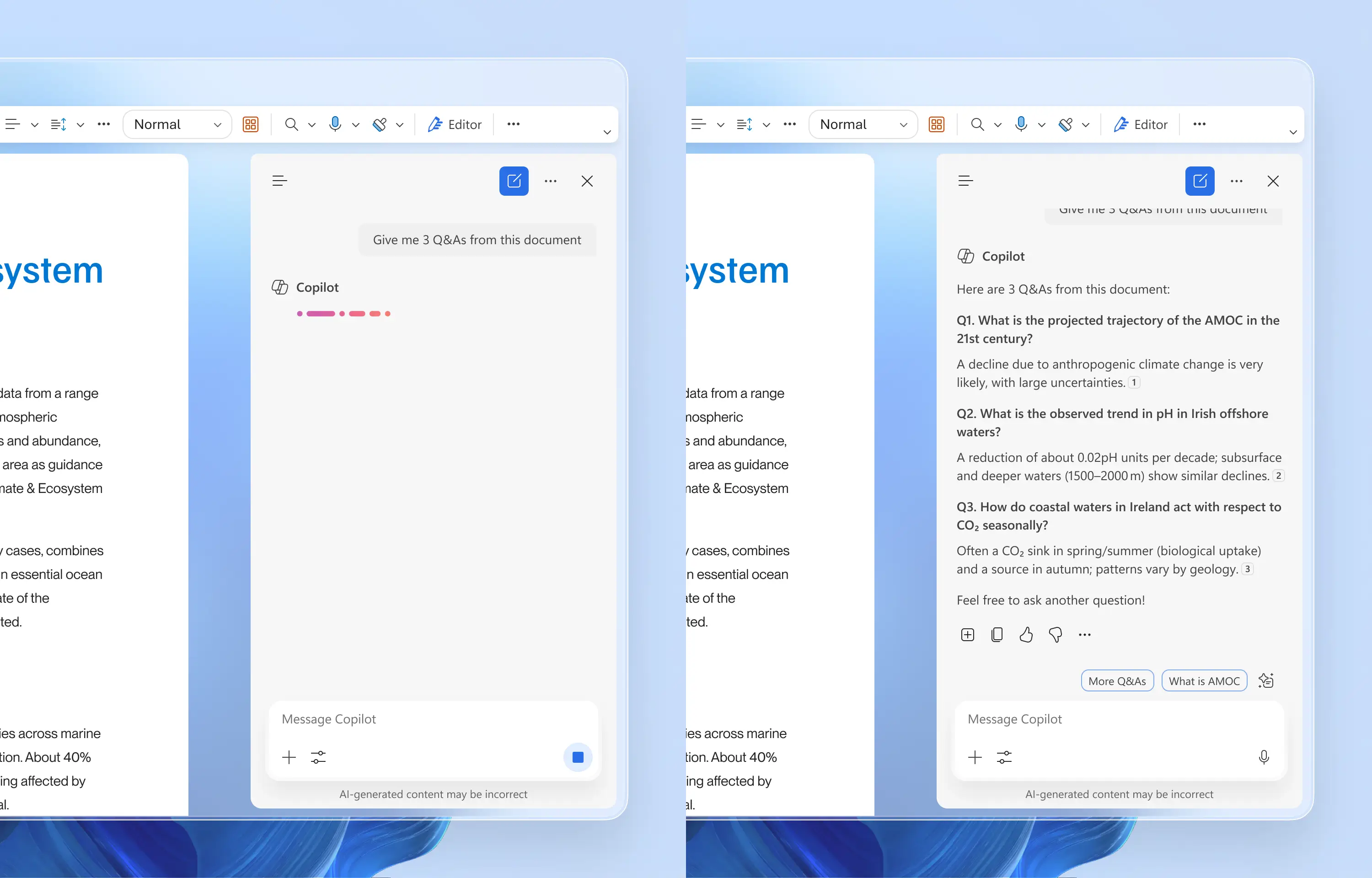
A lightweight loading state confirmed system activity during response generation, reassuring users that Copilot was actively working.
A lightweight loading state confirmed system activity during response generation, reassuring users that Copilot was actively working.
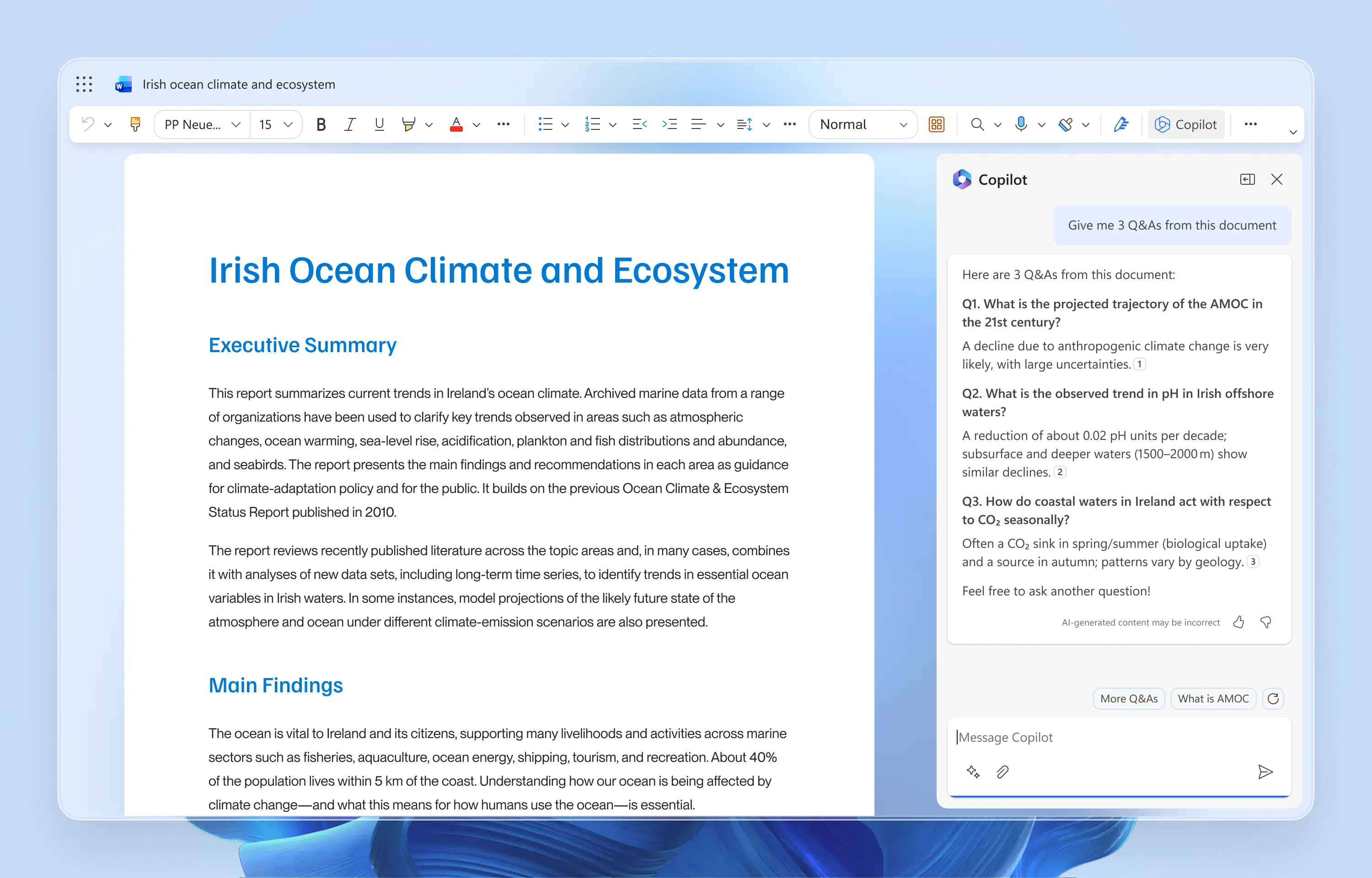
Suggestion pills enabled fast, low-effort follow-ups. This encouraged multi-turn engagement without forcing users to formulate prompts from scratch.
Suggestion pills enabled fast, low-effort follow-ups. This encouraged multi-turn engagement without forcing users to formulate prompts from scratch.
SEPTEMBER 2023–AUGUST 2024
Building on feedback from the first public release, I worked with the Office AI team to iterate Copilot Chat as adoption scaled—improving spatial efficiency, strengthening conversational continuity, and redesigning core components to enable support for longer, more complex workflows within the narrow side-pane constraints.
+34%
STARTER PROMPTS USAGE
-26%
SINGLE TURN DROP OFF RATE
SEPTEMBER 2023–AUGUST 2024
Building on feedback from the first public release, I worked with the Office AI team to iterate Copilot Chat as adoption scaled—improving spatial efficiency, strengthening conversational continuity, and redesigning core components to enable support for longer, more complex workflows within the narrow side-pane constraints.
+34%
STARTER PROMPTS USAGE
-26%
SINGLE TURN DROP OFF RATE
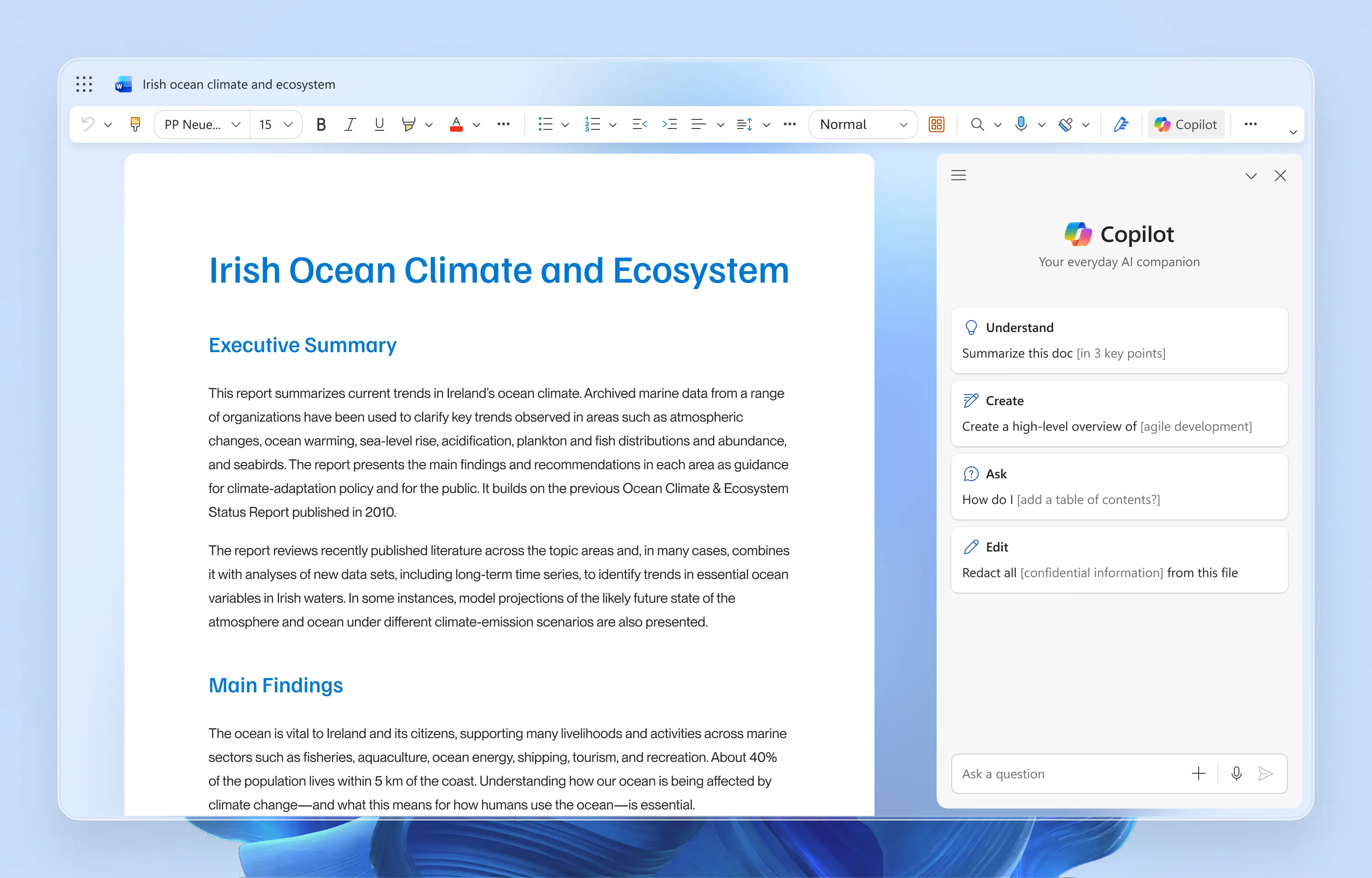
As users became familiar with Copilot Chat, the introductory card was removed, and zero queries evolved from generic starters into specific, action-oriented suggestions.
As users became familiar with Copilot Chat, the introductory card was removed, and zero queries evolved from generic starters into specific, action-oriented suggestions.
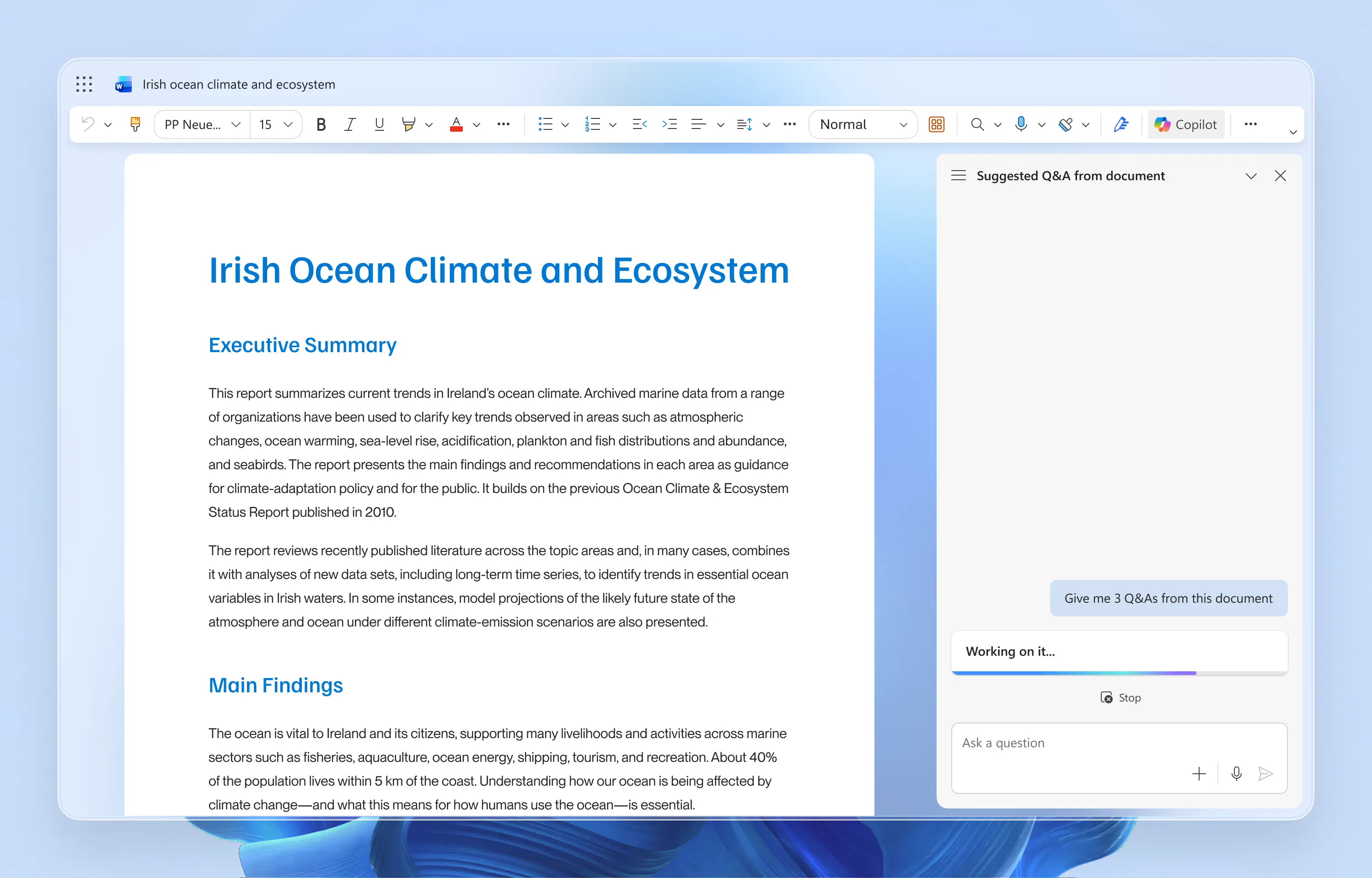
Users could continue typing in the prompt input while Copilot generated a response, enabling faster iteration and reducing idle time.
Users could continue typing in the prompt input while Copilot generated a response, enabling faster iteration and reducing idle time.
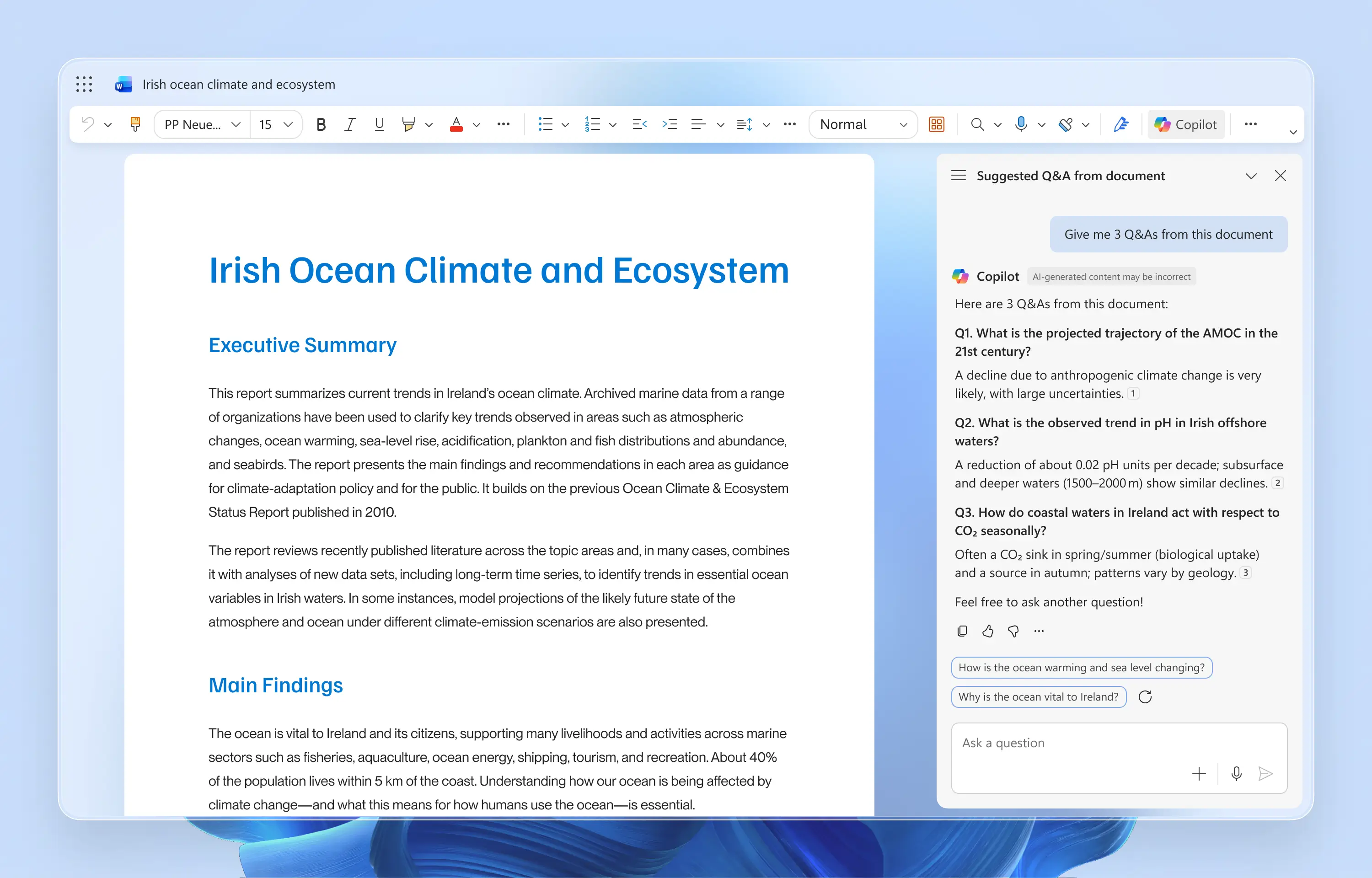
Given the pane’s limited width, the card-based design was removed from Copilot’s replies to maximize usable space and simplify the visual layout.
Given the pane’s limited width, the card-based design was removed from Copilot’s replies to maximize usable space and simplify the visual layout.
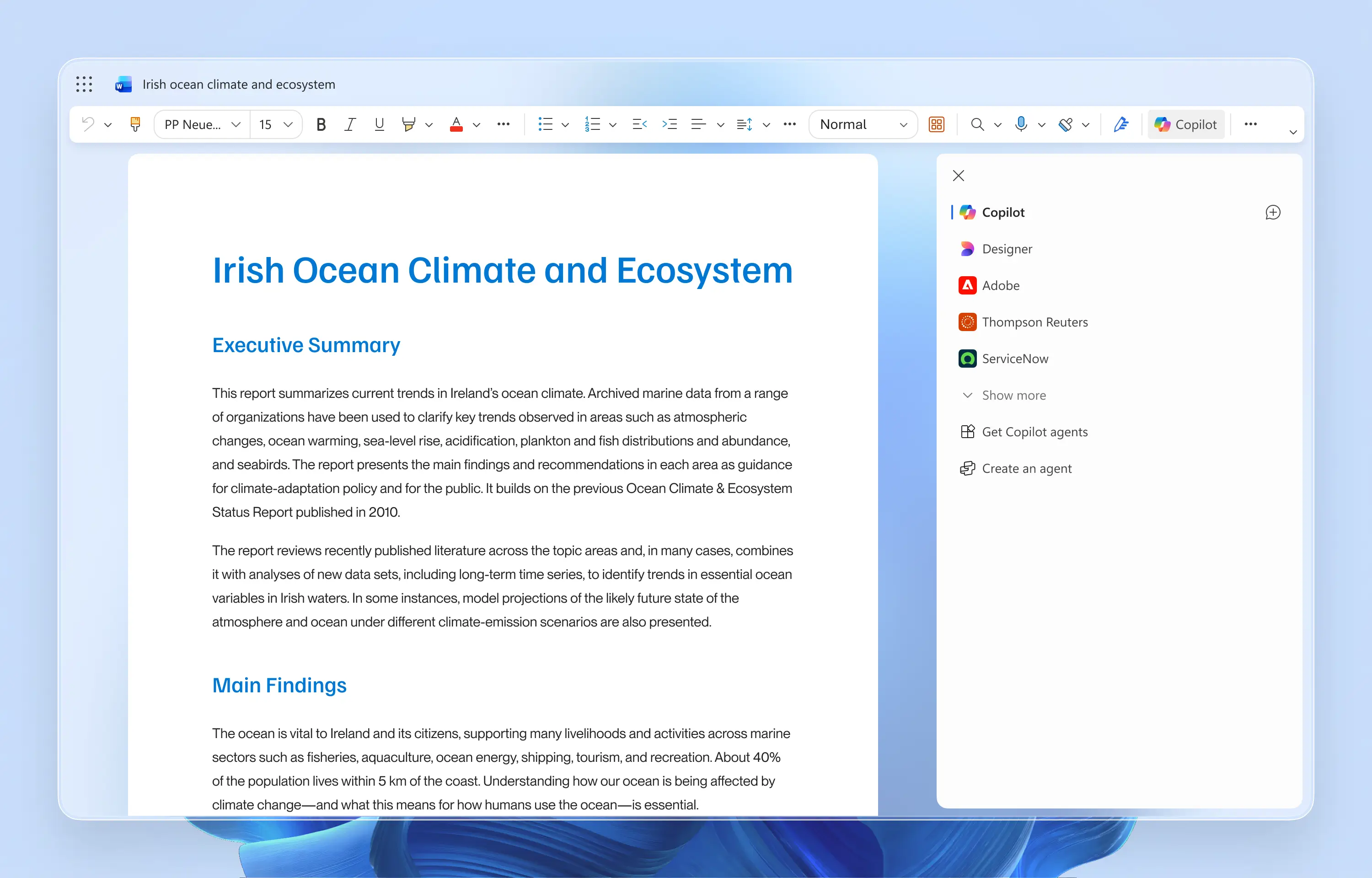
As capabilities expanded, users could activate plugins and agents directly within the side navigation, extending chat from a conversational surface into a gateway for richer workflows.
As capabilities expanded, users could activate plugins and agents directly within the side navigation, extending chat from a conversational surface into a gateway for richer workflows.
AUGUST 2024–PRESENT
As the strategy shifted to 'One Copilot' in FY25, the core chat framework was centralized under the Microsoft 365 AI team to ensure consistency across the ecosystem. My focus shifted from defining the core feature to orchestrating its specific adaptation for Word, ensuring global patterns didn't break distinct document workflows.
* The following designs were led by the Microsoft 365 AI team and are included here to illustrate the broader direction of Copilot Chat across the ecosystem.
AUGUST 2024–PRESENT
As the strategy shifted to 'One Copilot' in FY25, the core chat framework was centralized under the Microsoft 365 AI team to ensure consistency across the ecosystem. My focus shifted from defining the core feature to orchestrating its specific adaptation for Word, ensuring global patterns didn't break distinct document workflows.
* The following designs were led by the Microsoft 365 AI team and are included here to illustrate the broader direction of Copilot Chat across the ecosystem.
Designing Copilot Chat fundamentally reshaped how I think about interaction design. Conversations behave less like linear workflows and more like adaptive, stateful systems, requiring a careful balance between clarity, user agency, and model unpredictability.
This project reinforced my belief that a successful AI experience isn't defined by model capability alone, but by how well users can understand, guide, and correct the system over time—and how clearly the UI exposes that control.
Designing Copilot Chat fundamentally reshaped how I think about interaction design. Conversations behave less like linear workflows and more like adaptive, stateful systems, requiring a careful balance between clarity, user agency, and model unpredictability.
This project reinforced my belief that a successful AI experience isn't defined by model capability alone, but by how well users can understand, guide, and correct the system over time—and how clearly the UI exposes that control.